How a rundown corner of Berlin became a refuge for city’s Vietnamese, and how other Berliners found it
- Hired by East Germany as contract workers, Vietnamese who chose to stay in Berlin when the Wall came down gravitated to an indoor market in the city
- Fellow Berliners have discovered the Dong Xuan Centre and go there for the cheap manicures and shopping, and there are plans to make it Berlin’s Asiatown

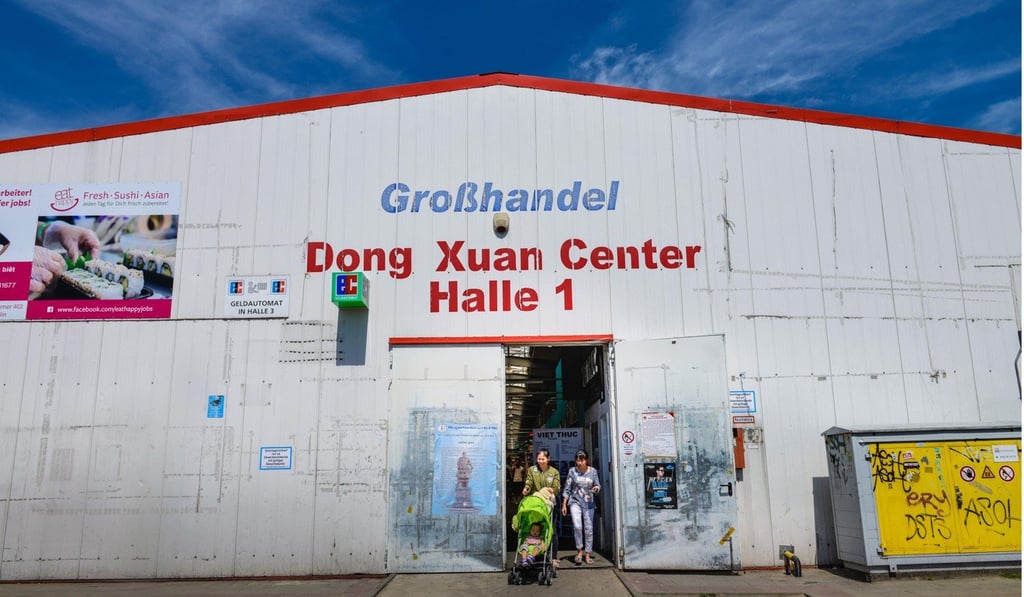
Old warehouses and typical plattenbau, apartment blocks made from prefabricated concrete slabs, line the streets in Berlin-Lichtenberg, a district in the northeastern part of Germany’s capital. But in the middle of this forlorn industrial area, where many buildings have been abandoned and stand idle, the Dong Xuan Centre stands out.
Its halls are filled with lively chatter, mostly in Vietnamese. People queue at restaurants to warm up with a bowl of hot pho. Shopkeepers lure visitors into their stores by loudly announcing the offers of the day.
The Dong Xuan Centre is home to numerous wholesale businesses, shops, and food producers. Eighty per cent of its tenants are Vietnamese. The others are Indian, Pakistani or Chinese. The history of the centre is closely connected to the story of thousands of Vietnamese who came to East Berlin as contract workers when it was the capital of communist East Germany.
During the 1980s, East Germany experienced a shortage of skilled labour. As a solution, the government signed treaties with other socialist countries such as Vietnam, North Korea, Mozambique, China and Cuba. These countries sent workers, who would return home as soon as their contract expired. For Vietnamese contractors, this was normally after five years.
One of the recruits from Vietnam was the father of 31-year old Minh Nguyen Huu. In 1988 he left his pregnant wife behind in Vietnam to start working in East Berlin. But a year later everything changed with the fall of the Berlin Wall and the subsequent reunification of Germany.