Food court by night, wet market by day: behind the scenes at a Malaysian institution
- Pasar Sentosa in Petaling Jaya doubles as a produce market and a cooked-food venue. Families have bought and sold goods and dishes there all their lives
- Open for 42 years, it recently moved to a new venue near an upmarket high-rise

Before supermarkets were introduced in Malaysia in the early 1960s, the wet market was the nucleus of every village and town.
In Section 17 of Petaling Jaya, a Malaysian city developed as a satellite township for the capital, Kuala Lumpur, the community revolves around a 42-year-old market: a wet market by day and food court at night.
The two shifts are led by strong committees determinedly looking out for the well-being of vendors and of customers.
Pasar Sentosa, as it is known, moved into a new home in August. After much controversy over the reallocation of space – the new development initially displaced the traders – and then heated negotiations, the wet market and food court committees managed to secure the coveted open-air space outside the premises of Seventeen Residences, a gleaming new mixed-development high-rise.
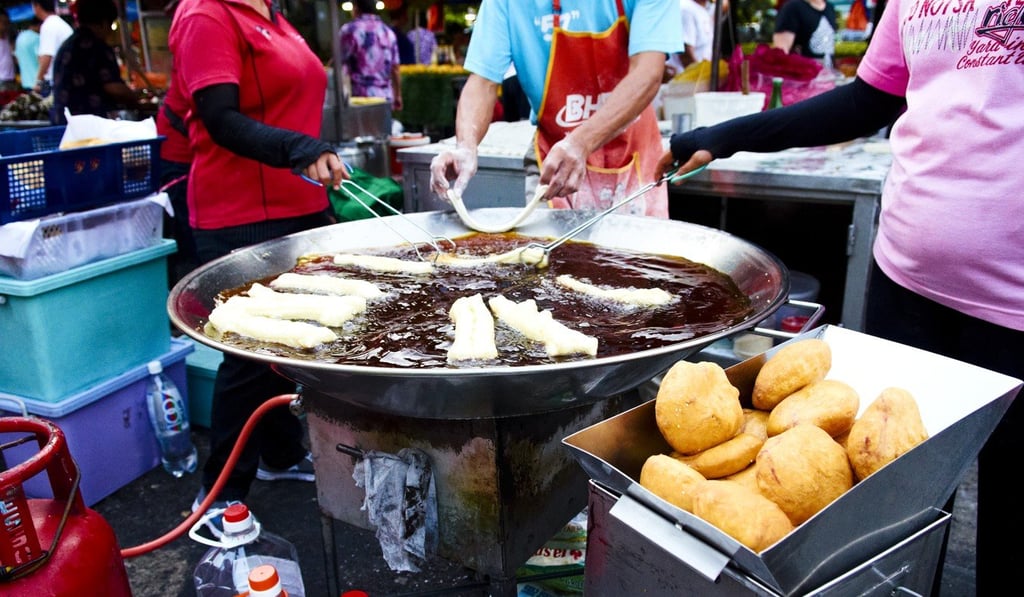
Vendors sell freshly fried yau char kwai (Chinese doughnut) and chee cheong fun (rice noodle rolls), cheap clothes and rows of old-fashioned biscuits in tins. Glistening green vegetables with sandy roots and fastidiously filleted fresh fish are piled on aisles. Chicken, fruit, dried herbs, spices, flowers, poultry and pork – everything is here.
Every day except Monday, vendors and customers buy and sell, and indulge in stories, gossip and recipes. The vendors are proud of their heritage and hard work, as the next generation of family members chips in to continue. They look out for one another and take pride in their customers, who first turn into friends, then family.