What to see in Nanjing, and why now is an appropriate time to explore China’s former capital
The Chinese capital under the Ming dynasty, and after the 1912 revolution, Nanjing has a rich heritage to explore, a moving monument to 1937 Japanese massacre, and tranquil, tree-lined streets for relaxation

This year marks both the 80th anniversary of the Nanking massacre and the 175th anniversary of the Treaty of Nanking, which formally ceded Hong Kong Island to Britain. This historical city on the Yangtze River is about a couple of hours away from Hong Kong, and easily accessible via inexpensive flights, so it’s an apt time to plan a trip to the former capital of China and sample its cultural treats.
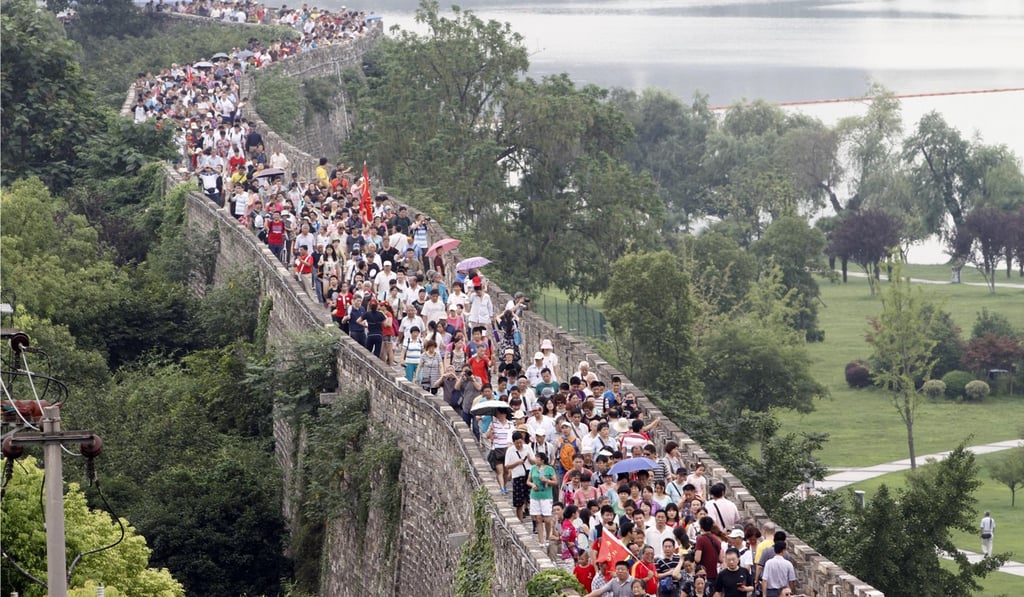
Now known as Nanjing, the city’s rich heritage stretches back long before the opium wars. It was first known as Nanking when Zhu Yuanzhang, the first emperor of the Ming dynasty, selected the city as China’s capital in 1367 and ordered the construction of 35km of city walls to protect him and his subjects.
The rise and fall of Luoyang, China’s forgotten capital
When Chiang Kai-shek established his capital in Nanking in 1927 there followed 10 years of relative stability and prosperity in China, known as the “Nanking decade”. It was abruptly terminated by the Sino-Japanese war, which inflicted a ghastly human toll on China and on Nanking in particular. Between mid-December 1937 and the end of January 1938, some 300,000 residents died and many more were subject to atrocities at the hands of the occupying Imperial Japanese Army.