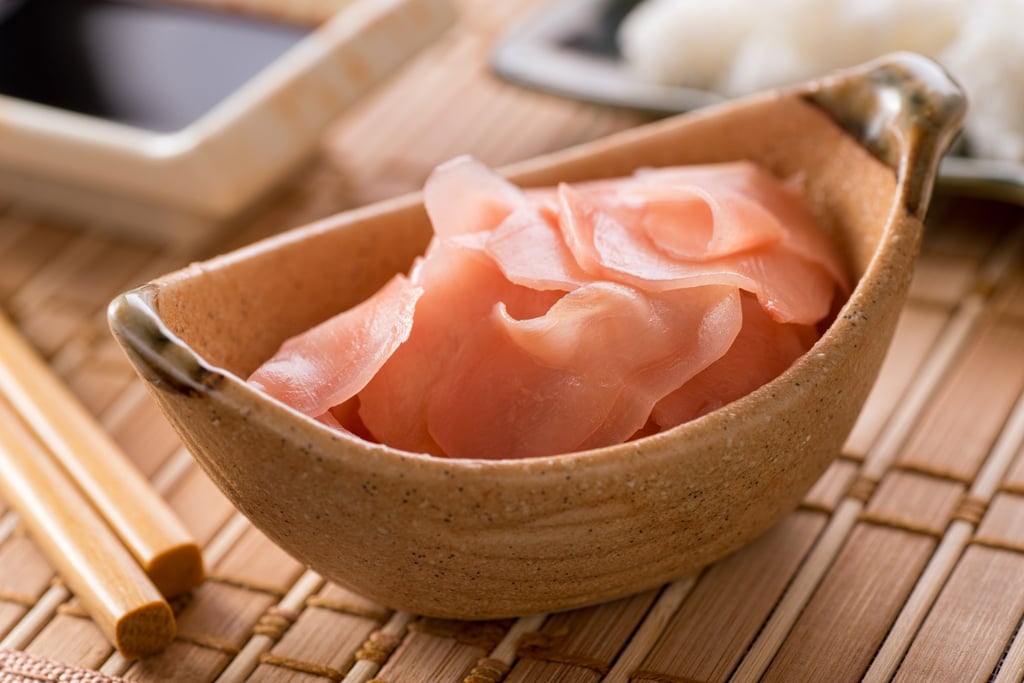
All about ginger, young and old. How to pickle it and a recipe that makes the most of it
A versatile spice that varies depending when it’s harvested, ginger can be pickled or used as seasoning. It goes with meat and seafood

The young ginger in the markets in late spring is very different from the old ginger that is available year-round. Yes, they are both a rhizome and come from the same plant but the former is harvested when the shoots are off-white with pink tips.
Young ginger is moist and tender with a very thin, edible skin and mild flavour. It is often eaten as a vegetable or made into a pickle.
Old ginger has been allowed to mature on the plant and the skin is thicker, the flesh fibrous and the flavour hot and strong, so it is usually used as a seasoning. Old ginger can be dried and then used to make ginger powder.
Young and old ginger should be chosen the same way: buy “hands” that have smooth skin and which feel heavy.