Why Hong Kong couples opt for a Chinese wedding chaperone
From traditional tea ceremonies to rituals such as the bride stepping over the threshold with her left foot first, the chaperone’s guidance ensures protocol is followed, with some friendly advice thrown in when family stress boils over

It’s the crack of dawn, and Choi Lai-Kwan dresses in her traditional Chinese outfit, before dashing out the door to a client’s house.
Choi is a dai kam jie, or bride chaperone, hired by couples ahead of their big day to guide them through the traditions and rituals of a Chinese wedding.
Trained as a social worker in her early 20s, Choi – now in her 40s – even acts as a counsellor when families argue during the stressful wedding planning phase.
It is just after 8am when she arrives at the house of the bride, Crystal Wong Po-ching, 28, who has relied on Choi’s help throughout the planning for her October wedding.
Choi starts by laying out the cheongsam and embroidered shoes for the bride’s mother who, with the chaperone’s guidance, helps her daughter dress for the morning’s ceremonies.
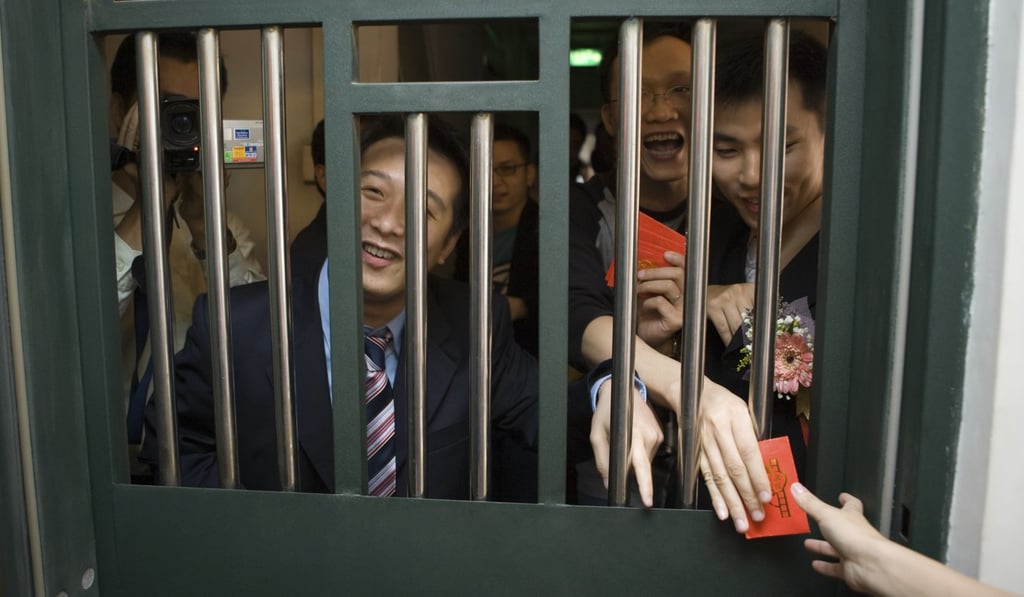
In ancient China, the groom had to win the approval of the bride’s friends and relatives, and subscribe to a tradition believed to originate from the Song dynasty (960-1279), called “barring the door”. This is for friends and relatives to show they will miss the bride, by literally blocking the front door, and asking for red packets.