How China’s Ming dynasty brought novels, porcelain and classic dishes to the world
The prosperous Ming dynasty restored Han Chinese rule after the Mongol-led Yuan dynasty and introduced numerous cultural and social changes

To understand Chinese culture, it is necessary to go back to the very beginning of its civilisation. In this series, we look at the most influential dynasties in Chinese history and how each, with its technological inventions and cultural advancements, helped propel the nation forward.
The 14th century was a time of chaos and reckoning for China. Decades of disastrous flooding, widespread famine and the spread of the bubonic plague began to slowly erode the Mandate of Heaven from the Mongol-led Yuan dynasty (1271-1368).
Peasant discontent boiled over into rebellion, and from the ranks of the destitute rose a fierce leader, Zhu Yuanzhang, a former beggar and Buddhist monk. In a stunning reversal of fortune, he drove the Mongols back beyond the Great Wall and proclaimed himself the Hongwu Emperor, the founder of the Ming dynasty (1368-1644).
Following the Yuan dynasty, Ming fashion was characterised by a concerted effort to reassert Han Chinese identity.
According to the Ming Shilu – also known as the Veritable Records of the Ming Dynasty – once Han Chinese rule was reinstated, Hongwu decried the “barbarian costumes” of the Yuan dynasty. He “ordered that dress be restored to the Tang style: all scholars and commoners tie their hair into topknots, officials wear black gauze caps, round-collared robes, belts and black boots”.
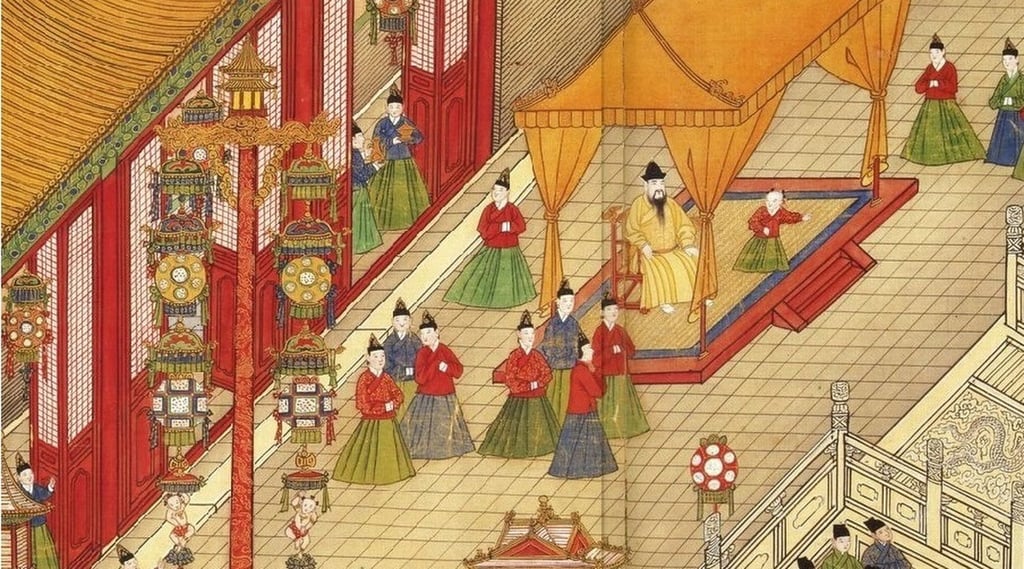
However, fashionable Mongol attire was still sometimes worn by early Ming royals, including the Hongwu Emperor himself. Thus, Ming fashion absorbed elements of Han Chinese and Mongol clothing.