Advertisement
The 357-year-old Buddhist text in Taiwan said to bring lifetimes of luck with one glimpse
The Tibetan Dragon Canon, a huge 17th century scripture on show at Taiwan’s National Palace Museum, has set social media ablaze
3-MIN READ3-MIN
1
Listen


Could merely glimpsing a 357-year-old Buddhist manuscript really grant you seven lifetimes of good fortune?
An old Chinese folk belief regarding the Tibetan Dragon Canon has recently been revived on social media as the monumental Qing dynasty (1644-1911) scripture takes pride of place in “Tibetan Dragon Canon: A Symphony of Imperial Power, Belief and Art in a Golden Age”, an exhibition at Taipei’s National Palace Museum.
While it is impossible to trace the origin of the qishi fubao – good karma for seven lifetimes – myth, it has exploded into a viral phenomenon. Some of those who have been to the exhibition even claim they sensed a powerful energy and got goosebumps in the text’s presence.
The monumental 108-volume manuscript was completed in 1669, two years after it was commissioned by the Kangxi Emperor (1654-1722) at the behest of his grandmother, Grand Empress Dowager Xiaozhuangwen (1613-1688), who asked her grandson to make her a gold-inked collection of all of the Buddha’s teachings, or sutras, recognised in the Tibetan Buddhist canon.
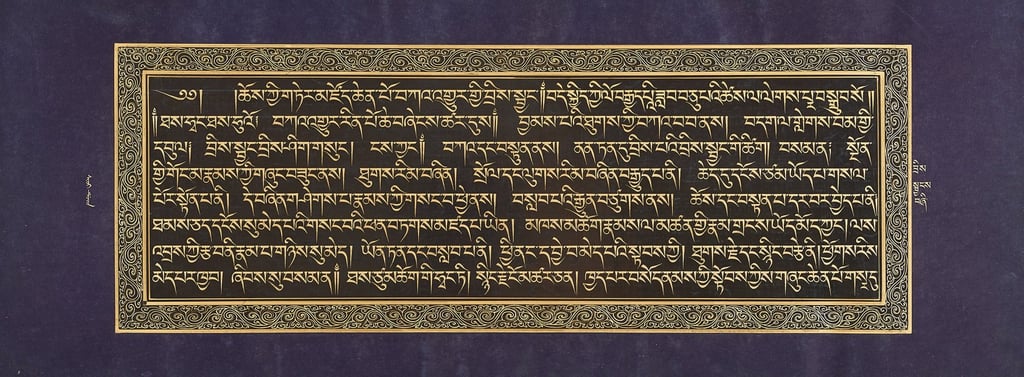
Each 33cm by 87.5cm (13-inch by 34-inch) volume features 300 to 500 pages of ciqing paper, a deep-indigo-dyed paper often used for religious symbolism, on which sutras were written in sparkling gold ink.
Advertisement
Select Voice
Select Speed
1x
AI-generated voice