Review | Hong Kong Chinese Orchestra’s season opener skilfully showcases the pipa
The HKCO’s concert showcased the various iterations of the musical instrument and how it has transcended borders along the ancient Silk Road

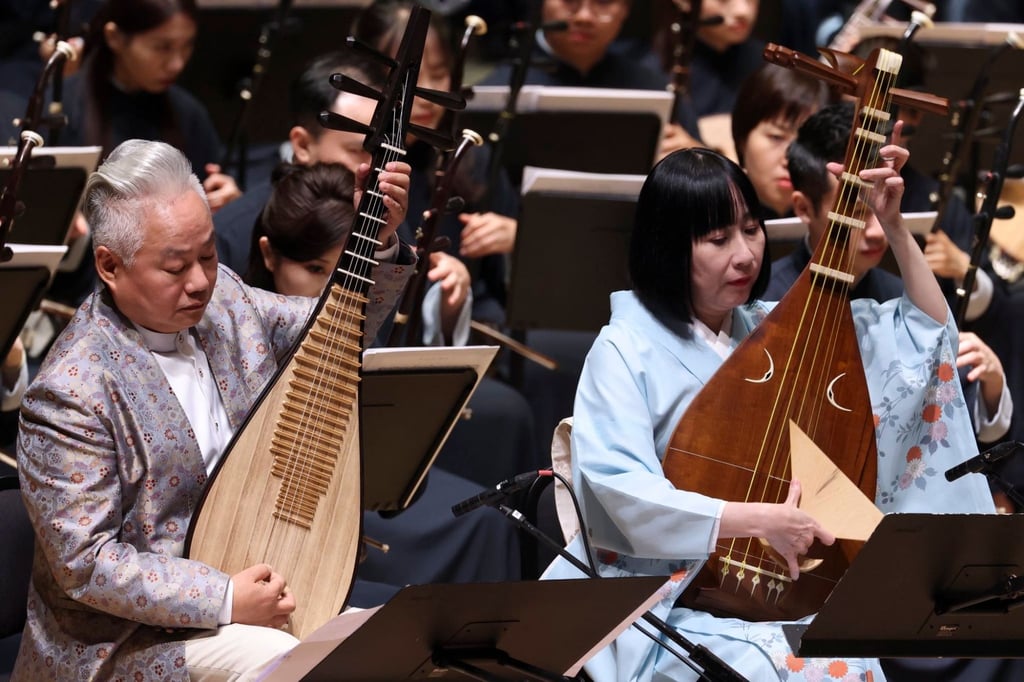
The Hong Kong Chinese Orchestra opened its new season on September 12 and 13 with “Silken Notes of the Pipa”, a concert that showcased the various iterations of the musical instrument as well as how it transcended geographical and cultural borders along the ancient Silk Road.
Using a large plectrum, guest soloist Akiko Kubota showed her mastery of the Japanese satsuma-biwa, creating an array of distinctive sounds by plucking and rubbing the strings. The chosen piece, “Heart of the Ocean”, is a prime example of the cultural fusion of instrumental music along the eastern Maritime Silk Road.
Looking west, there was the oud played delicately by Giannis Koutis from Cyprus. This instrument, which originates from Persia, sounds closer to the lute and guitar than to its East Asian counterparts.
The Nanyin pipa – performed by soloist Wong Yui-kiu – completed this “family gathering of pear-shaped instruments”.
The concert was a sonic feast: the shell horn and the Tibetan horn evoked images of the sea and high ground, while the guqin by soloist Wang Youdi and shakuhachi by soloist Sun Yongzhi transported the audience to ancient China and Edo-period Japan, respectively.