How the Jolly Roger evolved from feared pirate flag to One Piece social justice symbol
Once the herald of Blackbeards and Jack Sparrows, the Jolly Roger is now being used by protesters as a symbol of justice and freedom

Pirates, ahoy! You may be visualising RL Stevenson’s Treasure Island, legendary figures like Blackbeard, fictional pirates like Peter Pan’s Captain Hook or The Pirates of the Caribbean’s Captain Jack Sparrow – and, of course, the familiar and much-feared flag featuring a white skull and crossbones on a black background, known as the Jolly Roger.
Flags, comprising a piece of fabric, usually oblong, with particular colours or designs, are well recognised as symbols for sovereign states, organisations, armed forces, offices and individuals.
Such messages were delivered at a timely, tactical moment: false flags flown were replaced only when targets were in firing range – they would thus have no chance of escape, and the crew would choose to surrender rather than face likely bloodshed.
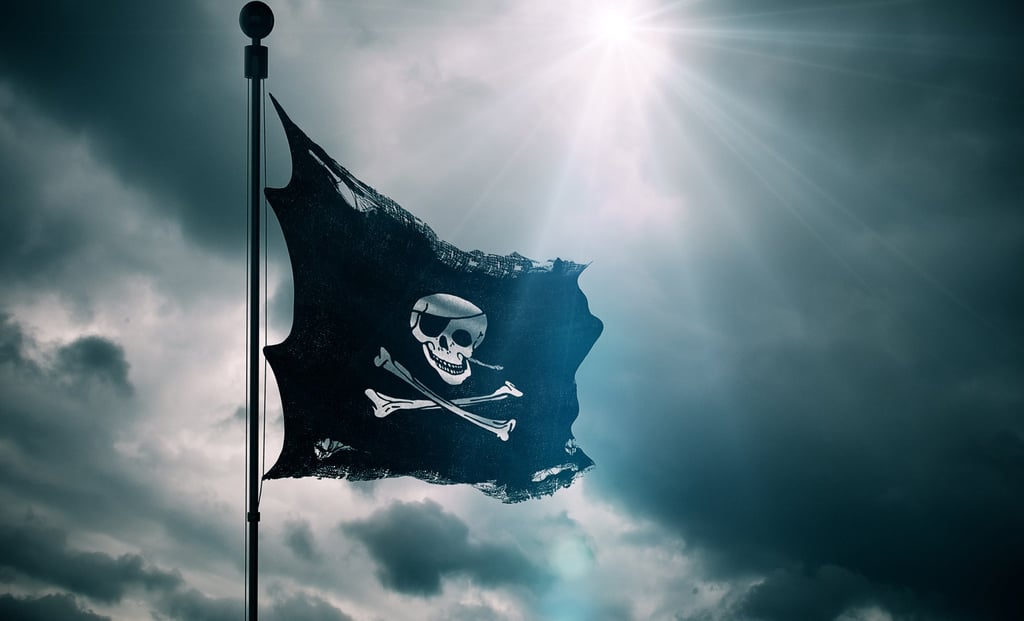
The origins of the Jolly Roger’s design are not verified, though its roots may lie in the flag of the Barbary pirates – Muslim pirates operating from the coast of North Africa, at their zenith during the 17th century – who added a skull to their green flag from the 16th century on.
At the same time, the skull and crossbones had, since the Middle Ages and early Christian tradition, signified death and was used by captains as shorthand in ships’ logs to note sailors who had died. The first flag with both skull and crossbones was, according to historians, flown by 18th-century French pirate Emanuel Wynn, whose realm spanned the western Atlantic Ocean and the Caribbean Sea.