Green activists vow to keep fighting Indonesia dam project that could wipe out rare ape
- A hydroelectric scheme in North Sumatra threatens the tropical rainforest habitat of the Tapanuli orangutan, the world’s rarest great ape
- Activists say scheme financier Bank of China turned a blind eye to the threat to the orangutans, ignoring China’s own green development guidelines

Surrounded by dense rainforest, as many as 50 protesters bore banners and placards reading “Damn the Dam!” and “Destroying the forest means destroying lives”. Several of them climbed into the forest canopy above and continued their protest from on high.
They were demonstrating against the controversial Batang Toru dam project, a 510-megawatt hydroelectric project being developed by a Chinese-Indonesian consortium in Indonesia’s North Sumatra province, and broadly considered to be part of the “Belt and Road Initiative”, China’s plan to grow global trade through infrastructure investment.
The protest, at the end of February and one of a number that have since been held farther afield, appears to have fallen on deaf ears, but campaigners are not about to give up and court action is still ongoing.
The US$1.5 billion project is being developed by China’s state-owned Sinohydro and Indonesia’s North Sumatra Hydro Energy. With its roads, tunnels and high voltage towers, environmental groups say it will have an irreversible negative impact on the Batang Toru Ecosystem – a tropical rainforest habitat.
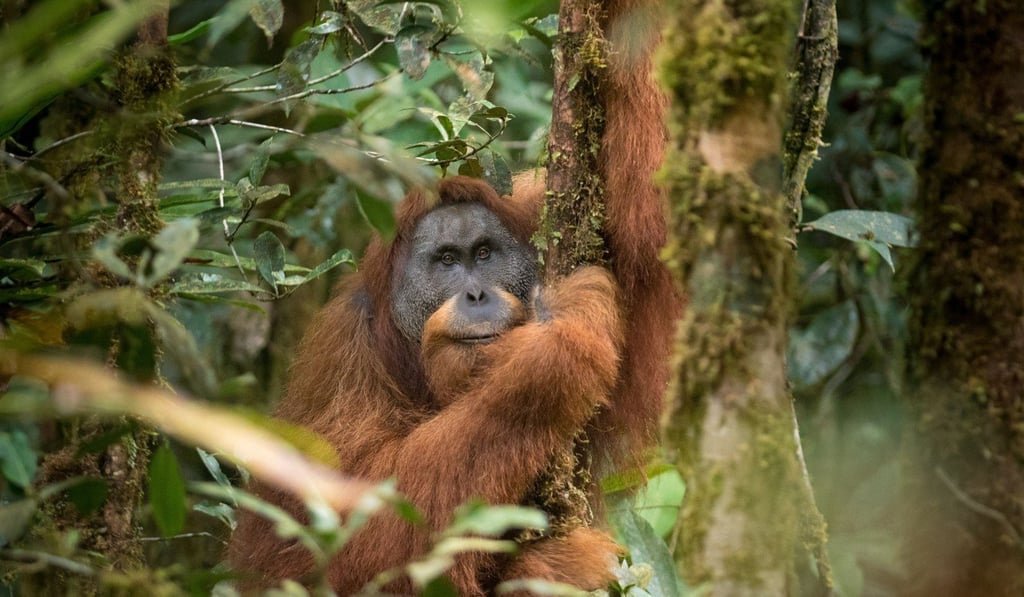
They say it will almost certainly mean extinction for the Tapanuli orangutan, a great ape that was only recently recognised as a distinct species and is unique to the area. Experts say there are only about 800 individuals left, making it the rarest great ape species in the world.
Indonesia’s largest environmental organisation, Walhi, took the case to court on March 4, suing the governor of North Sumatra province for issuing construction permits based on what the group says was a deeply flawed environmental impact assessment. Major risk factors, including earthquakes, were not properly accounted for in the documents, according to Dana Prima Tarigan, the director of Walhi’s North Sumatra chapter.