Indonesia children’s foundation, battered by summer earthquakes, seeks help to rebuild
None of the 90 children cared for by the foundation was badly hurt by the quakes on Lombok, but they are sleeping outside, suffering mental trauma and at risk of disease

Businessman and philanthropist Chaim Fetter crouched fearfully by a doorway inside his office when the first of a series of powerful earthquakes struck the coastline of the popular tourist island of Lombok in Indonesia.
As the subsequent tremors started to slow in frequency following the magnitude-7 quake, early on the evening of August 5, Fetter, 37, bolted for the nearest exit. His mind raced as he darted off to the mosque where 90 children being cared for by the Peduli Anak Foundation he co-founded had gathered for evening prayers.
When he arrived at the mosque, Fetter was relieved to find that there had been no serious injuries or fatalities among the children. At that moment, all he could do was try to keep the panicked group calm, while they waited anxiously for a tsunami warning to end. Fortunately for them, it did.
Two subsequent major aftershocks – on August 9 and 18 – were of a magnitude greater than 6. The Indonesian Agency for Meteorology, Climatology, and Geophysics says more than 1,500 aftershocks have been recorded at magnitudes stronger than 2.
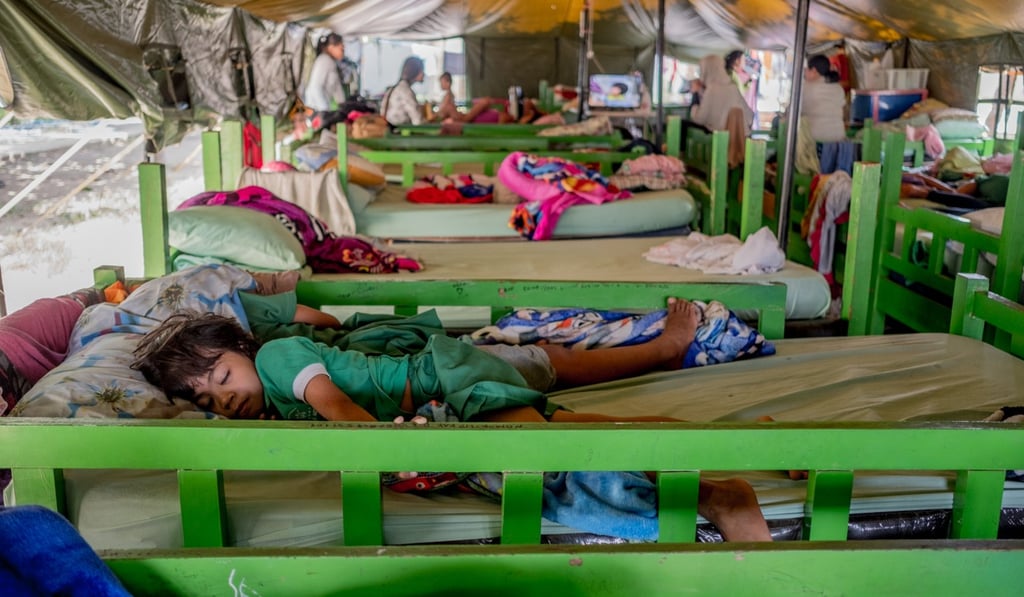
Two months and more than 2,000 aftershocks later, the children of Peduli Anak are still sleeping outside in what look like army tents, with no showers, no proper toilets and receiving no meaningful help from the government. The children’s collective mental trauma is a serious concern, Fetter says. That is in addition to cases of malaria, severe diarrhoea, and skin diseases that have spreading within the group.
The only structure still standing at Peduli Anak’s complex is the education centre, which may or may not be safe to enter. All the residential structures have been levelled.