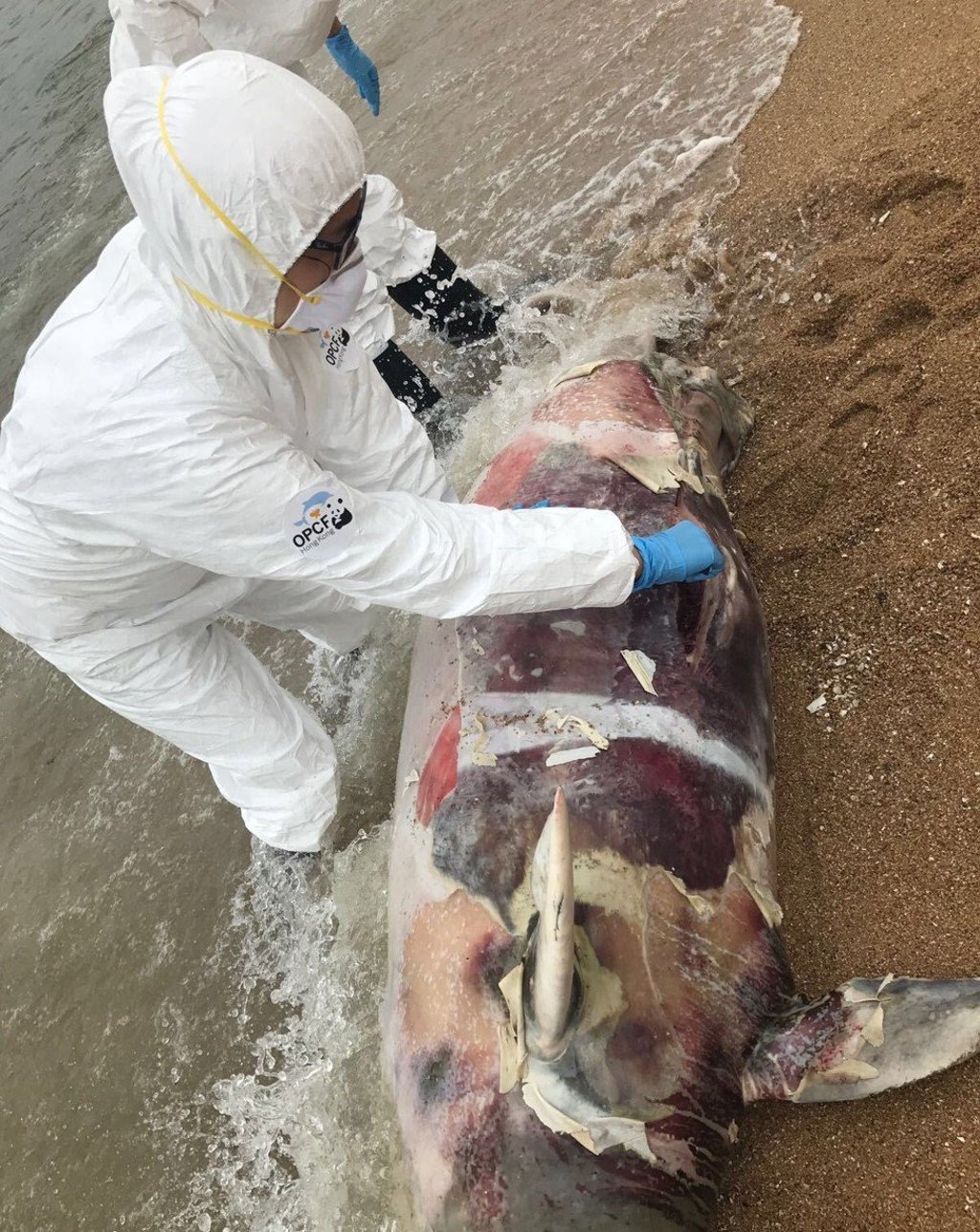
Scientists fear land reclamation will harm ecology of south China waters and survival of iconic white dolphin
China restricts reclamation but Hong Kong ploughs ahead with proposals to concrete over more natural seabed; scientists warn of a price to pay, and voice alarm at the cumulative impact of reclamation on the Pearl River Delta

Struggling to meet targets to deal with a chronic housing crisis, the Hong Kong government has been touting five new reclamation projects as essential for solving the problem. After publication of an official report last week revealing the number of Chinese white dolphins in local waters remains critically low, however, marine scientists are insisting that enough is enough.
“We already have the boundary [crossing] facility, the Hong Kong-Zhuhai-Macau bridge. There are already around 30 projects ongoing in the Pearl River Delta, and they are all having an impact on the Chinese white dolphins – their survival and reproduction,” says Kenneth Leung Mei-yee, professor of aquatic ecology and toxicology at University of Hong Kong.
“My main concern is that doing all these reclamation projects within the Pearl River Delta will cause a big problem eventually,” he says.
Leung is one of a growing number of eminent marine scientists who are increasingly concerned about the long-term cumulative damage caused by multiple reclamation projects around the delta region in southern China.
The delta is coming under increasing pressure because it is also at the heart of the “Greater Bay Area” plan to connect Hong Kong and Macau with nine nearby cities in China and create a financial and innovation powerhouse.
Leung says there have not been any specific studies on reclamation and loss of natural seabed. Instead, he says, “we tend to rely on environmental impact assessments for specific projects”.