Advertisement
Opinion
Biden’s China policy tweak is welcome, but it’s still based on a fantasy
- As Sullivan made clear in an extensive speech, the US is making a partial return to a realpolitik approach to China
- However, the policy framework remains unchanged: China is still an ideological ‘other’ that is not democratising as the US wished
4-MIN READ4-MIN
4

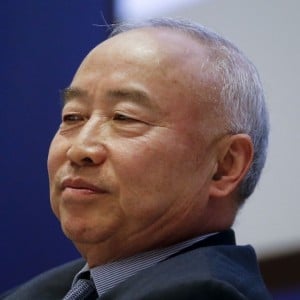
Lanxin Xiang is Ngee Ann Kongsi Professor in International Relations at S.
US National Security Adviser Jake Sullivan’s speech last month praising the Biden administration’s China policy was remarkable not because it offered outstanding strategic vision, but rather because of the lack of it.
Under Biden’s China policy, the bilateral relationship became a contest of “democracy vs autocracy”. More than a way to define the nature of great power relations in the 21st century, it became a framework for policymaking. This misguided approach has actually restrained policy options, as it means great-power politics is handled with ideological rigidity.
In his speech, Sullivan reasserted that China is the “only state with both the intent to reshape the international order and the economic, diplomatic, military, and technological power to do it”. Moreover, Beijing sought to “catch up and surpass” the US in hi-tech. It is “working to make the world more dependent on China” and “taking steps to adapt the international system to accommodate its own system and preferences”, he said.
Yet, notably, Sullivan did not frame US-China relations as “democracy vs communist autocracy”. This is in sharp contrast to the US-China dialogue that took place in Anchorage in 2021, when Secretary of State Antony Blinken sought to legitimise America’s right to interfere with what China considered its internal affairs, by stating that China’s actions, “including in Xinjiang, Hong Kong, Taiwan, cyberattacks on the US and economic coercion towards our allies … threaten the rules-based order that maintains global stability”.
Select Voice
Select Speed
1x
AI-generated voice