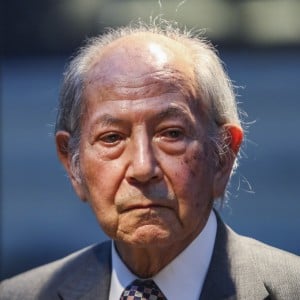
For Hong Kong’s judiciary, whether English will remain an official language beyond 2047 is the question
- Without official recognition of English, how can the common law system work? And what of ‘one country, two systems’? These are existential questions that should engage every lawyer, magistrate and judge

“In the beginning was the Word”, goes the first sentence in Saint John’s gospel. Words are powerful. They change lives. In communities governed by the rule of law, it is through the words of magistrates and judges that the fabric of society is maintained.
These tribunals have no executive power. It is by words alone that issues are determined, and the reasons behind them expressed. But words are also limited by the language in which they are expressed. A court judgment in English is meaningless to those unfamiliar with the language.
In Asia, the common law prevails in much of the former British Empire: Pakistan, India, Sri Lanka, Malaysia, Singapore, Brunei – and Hong Kong. Article 8 of the Basic Law lays down the common law as the governing legal system. Article 9 makes English an official language. And Article 92 says that judges may be recruited from other common law jurisdictions: by implication, where English is the dominant language.