
Advertisement
US-China relations
Opinion
Anthony W.D. Anastasi

Opinion | Why the US needs to go down China’s public transport route

  • The convenient subway system in big cities like Shanghai and the country’s expansive rail network make car ownership unnecessary and exploring China easy
  • Investment in public transport in the US would not only fuel the economy and create jobs, but help low-income communities, reduce emissions and revitalise urban areas

Reading Time:3 minutes
Why you can trust SCMP
38
A bullet train passes by the Yongdingmen or Gate of Perpetual Peace in Beijing. China’s high-speed rail makes exploring the country easy, and is less carbon-intensive than air travel. Photo: Xinhua

After spending an uninterrupted three-and-a-half years in China, this summer was my first opportunity to return home and visit family and friends in sunny south Florida. I sold my car before moving to China, so this was my first experience of being back home in the United States without my own automobile.

The absurdly priced Uber trips, poorly covered bus routes and the nuisance I caused my friends and family asking for rides made me wonder how anyone in the US can live without a car.

During my years in Shanghai, I have never had the need to own a car. Shanghai’s 19-line, 802km-long subway system is an incredible way to get around. Not only has it saved me money, when compared to my life in South Florida, but it has also made me healthier, thanks to walking more.
Advertisement
When travelling outside Shanghai, instead of taking a plane or driving an immensely long distance, like I would have done in the US, I have taken trains. China’s traditional train and high-speed rail system is sufficiently developed, quick and very convenient.
My return to the US after spending so much time in China has made it obvious that the US should take a page out of China’s book and invest massively in public transport. Investing in public transport can fuel economic growth in the US. By expanding public transport infrastructure, the US could generate millions of immediate job opportunities across construction, operations and maintenance.
Advertisement

Additionally, accessible public transport connects low-income earners to employment centres, empowering them to secure jobs they previously could not reach. This inclusivity not only boosts individual livelihoods but also expands the overall labour force, fostering productivity and driving long-term economic growth.
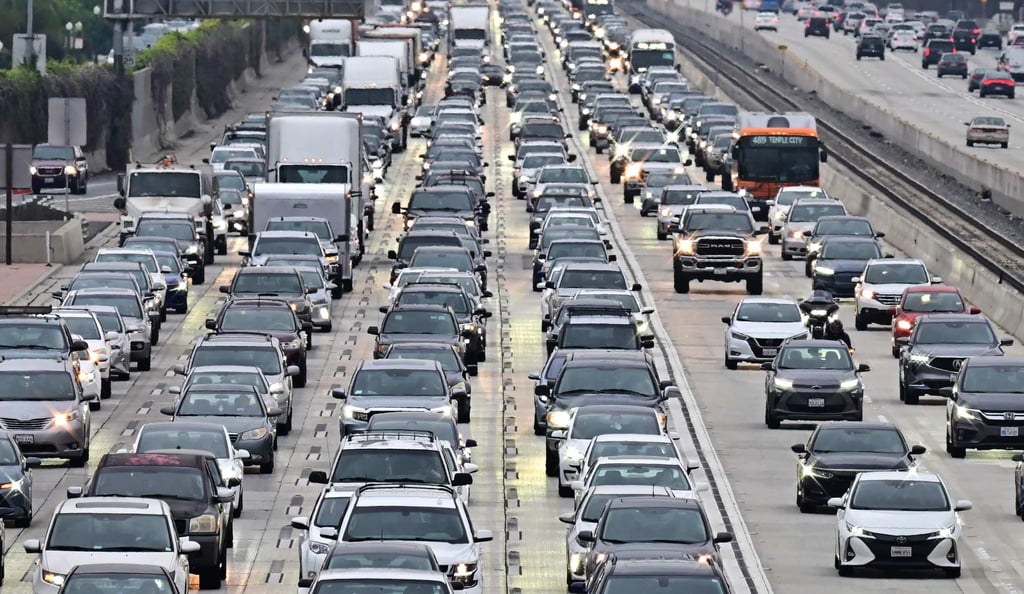
Vehicles head east on a freeway during the evening rush hour commute in Los Angeles, California. Photo: AFP
Advertisement
Select Voice
Choose your listening speed
Get through articles 2x faster
1.25x
250 WPM
Slow
Average
Fast
1.25x