Advertisement
Opinion
How the coronavirus pandemic and border conflict with China pushed India closer to the US
- The economic disruption triggered by the coronavirus has forced India’s prime minister to unveil a series of economic reforms, which, following Chinese moves in Ladakh, include active economic decoupling from China and closer ties with the US
4-MIN READ4-MIN

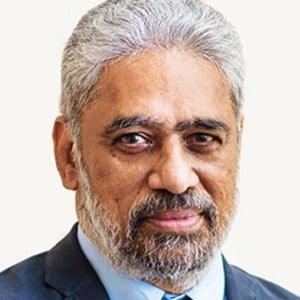
Professor C. Raja Mohan is director, Institute of South Asian Studies, National
University of Singapore.
The Covid-19 crisis has sharpened India’s long-standing strategic challenges as well as intensified the search for answers to them.
The massive economic disruption triggered by the coronavirus has forced Indian Prime Minister Narendra Modi to unveil economic reforms and a broad political framework under which they could be pursued. The geopolitical dimension of this economic restructuring ties in closely with the reordering of India’s great power relations, hastened in recent days by Chinese aggression in the eastern Ladakh region.
India’s retaliation so far has focused on an economic escalation rather than a military one. And amid Beijing’s refusal to walk back from the territories that it has occupied in the current crisis, the pressures grow on India for an economic decoupling from China.
If Beijing has been the source of many recent economic and foreign policy changes in New Delhi, the United States has increasingly become quite central to India’s answers. Although there is much uncertainty in America’s own direction and its relationship with China, the prospects for a deeper strategic partnership between Delhi and Washington have improved significantly.
Select Voice
Select Speed
1x
AI-generated voice