Advertisement
Opinion
How Hong Kong courts resolve tension between national security law and Basic Law will determine the city’s future
- The Hong Kong judiciary is being called upon to calibrate the ‘one country, two systems’ formula so that it comfortably accommodates Hong Kong cultural values with national aspirations
6-MIN READ6-MIN

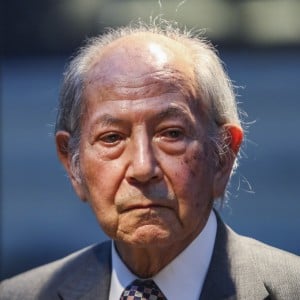
Henry Litton is a retired Court of Final Appeal judge and author of "Is the Hong Kong Judiciary Sleepwalking to 2047?".
The new national security law has 66 articles and is harsher in tone and substance than most people expected. Its terminology, in places, lacks the precision one finds in common law statutes. It leaves much room for judicial interpretation and it creates a dynamic tension between its own wording and that of Hong Kong’s Basic Law. This is likely to create particular challenges for the Hong Kong courts when dealing with enforcement.
The central government’s Office for Safeguarding National Security in Hong Kong has a wide role to play, such as “collecting and analysing intelligence and information concerning national security”. But it also has a less-well-defined function: “overseeing, guiding, coordinating with and providing support to the [SAR] in the performance of its duties for safeguarding national security”.
Hence the crucial question is: has the office been given executive powers exercisable within Hong Kong’s justice system?
Article 49(4) says that the office’s mandate includes “handling cases concerning [an] offence endangering national security in accordance with the law”. The expression “handling cases” is amorphous. If it meant, for instance, prosecuting offenders in Hong Kong’s courts, that would be contrary to the general principles set out in Article 1 of the law and would set up a clash with the Basic Law.
Select Voice
Select Speed
1x
AI-generated voice