Advertisement
Opinion
China must be part of Korean peace negotiations to prevent further mistrust
Zhang Baohui says that as Korea peace talks expand to include the United States, the parties involved should consider adding China as well, to avoid a repeat of deteriorating relations between Russia and the West
3-MIN READ3-MIN

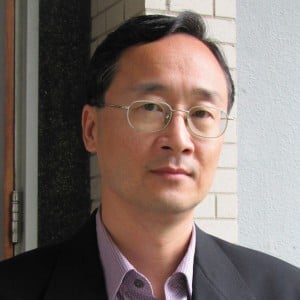
Zhang Baohui is professor of political science and director of the Centre for Asian Pacific Studies at Lingnan University in Hong Kong.
Chinese foreign minister Wang Yi went to Pyongyang on May 2 and met North Korean leader Kim Jong-un to discuss the rapidly evolving Korean peninsula security situation. This is the first visit to North Korea by a Chinese foreign minister in 11 years. On May 4, Chinese President Xi Jinping exchanged phone calls with his South Korean counterpart, Moon Jae-in. Finally, to everyone’s surprise, Xi met Kim in the Chinese coastal city of Dalian on May 7 and 8.
This flurry of Chinese diplomatic activity indicates Beijing’s growing anxiety over the Korean peace process. While Beijing officially supports the process, many Chinese strategic thinkers are worried that China could be locked out, even becoming irrelevant. Indeed, unlike North Korea, South Korea and the United States, China currently has no formal role in the peace process. This situation will deny Beijing any input in the design of a future Korean peninsular security framework, creating uncertainties for China’s strategic interests.
The theory of realism in international relations suggests that China should indeed worry about the future of security in the region. Defensive realism assumes that states care greatly about their security because of the anarchic international order. They use alliances to safeguard their security against potential threats from powerful countries. While a divided Korea has resulted in Pyongyang’s alliance with Beijing, and the US-South Korea alliance, a Korea after reconciliation would instead hedge against a powerful China by maintaining US military presence on the peninsula.
Select Voice
Select Speed
1x
AI-generated voice