Advertisement
China economy
Opinion

China must innovate now or lose its economic competitiveness

Xu Qing says profound changes in demography, the environment and market conditions are forcing a transformation on the country, but China has the capacity to shift gear, and upgrade its economy to one driven by innovation

Reading Time:4 minutes
Why you can trust SCMP
Xu Qing says profound changes in demography, the environment and market conditions are forcing a transformation on the country, but China has the capacity to shift gear, and upgrade its economy to one driven by innovation
Xu Qing
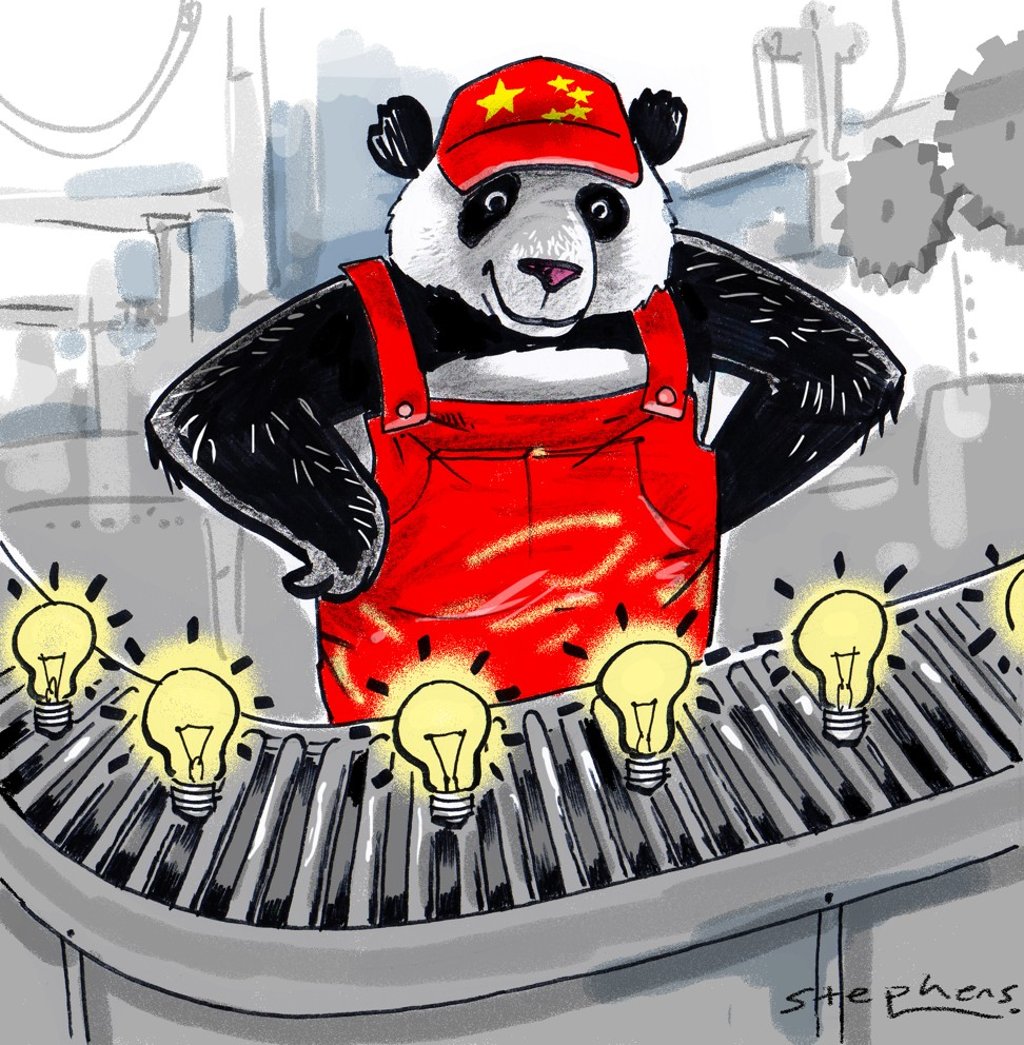
China has the ability to scale the mountain of innovation: it has the human capital to propel research and development. Illustration: Craig Stephens
China’s stellar rise to the world’s second-largest economy was underpinned by an abundant supply of cheap labour and capital, huge export markets buying cheap Chinese goods, and a growth-at-all-cost development model at the expense of environmental and social well-being.

Now, the low-hanging fruits have been picked and the old economic engines are spluttering.

First, the demographic dividend is diminishing and society is rapidly ageing. The number of working-age Chinese has been dropping, and the times of a seemingly unlimited supply of young and cheap labour are gone. Meanwhile, the elderly population is set to skyrocket as a result of the low fertility rate and increasing life expectancy. Such demographic pressures signal an urgent need for productivity gains through technological innovation and upgrading.

Advertisement

Second, the high level of credit supply has left China with diminishing returns on capital and a high debt-to-GDP ratio. Regulators have made deleveraging a top priority. Therefore, it is highly unlikely that the liquidity floodgates will be opened again to stimulate growth, and in the remote possibility that credit growth speeds up again, its effectiveness will be much less profound.

Third, China’s competitiveness in low-value-added exports is declining, with rising labour costs and regulatory costs, such as for environmental protection, driving up corporate expenses.

Advertisement

On top of that, China’s large trade surplus and “unfair trade practices” are often criticised by developed countries. As a result, economically and politically, it is hard for China to expect exports to drive growth.

Advertisement
Select Voice
Choose your listening speed
Get through articles 2x faster
1.25x
250 WPM
Slow
Average
Fast
1.25x