Three ways the US can prevent Kim Jong-un’s nuclear missiles from taking off
Douglas H. Paal says rebuilding its own missiles leverage, diplomatic outreach to Pyongyang, and covert and cyber threats to the regime would constitute a practical strategy for the US in tackling North Korea
Policy analysts are throwing ideas around for how to deal with North Korea. There are arguments to abandon the US alliance with South Korea and reunify the peninsula under a denuclearised regime, to acknowledge but freeze the North’s weapons programmes, to persuade Beijing to solve the problem, to squeeze Chinese entities doing business with Pyongyang through secondary sanctions, or, in a contrary twist, to work with the North against China.
All these ideas and more have a major element in common. They are pipe dreams, not strategies.
North Korea has no intention to give up its nuclear weapons and the means to deliver them, unless compelled to do so. China will not sacrifice its unpleasant neighbour for fear of losing its buffer against US influence moving right up to its border with the peninsula. And the US has not assembled the leverage to change these calculations.
By the same token, China’s proposal to suspend exercises in exchange for a suspension of the North’s testing is a non-starter, because it would further reduce American and South Korean leverage, and diminish the strength of the alliance precisely when it is most needed.
To change these circumstances requires a three-part strategy. The first requirement is to rebuild the leverage that has evaporated in the years since the North’s testing began. President Barack Obama did two things that showed part of the way forward. He authorised an increase in national missile defence launchers to defend the US, and made an offer of the Terminal High Altitude Area Defence (THAAD) anti-missile system to defend parts of South Korea. China was enraged by both of these actions, and is still trying to bludgeon Seoul into giving up on THAAD.
Therein lies a lesson: if you want to motivate China to move effectively against North Korea, Beijing needs to see and feel the costs to itself of not doing so.
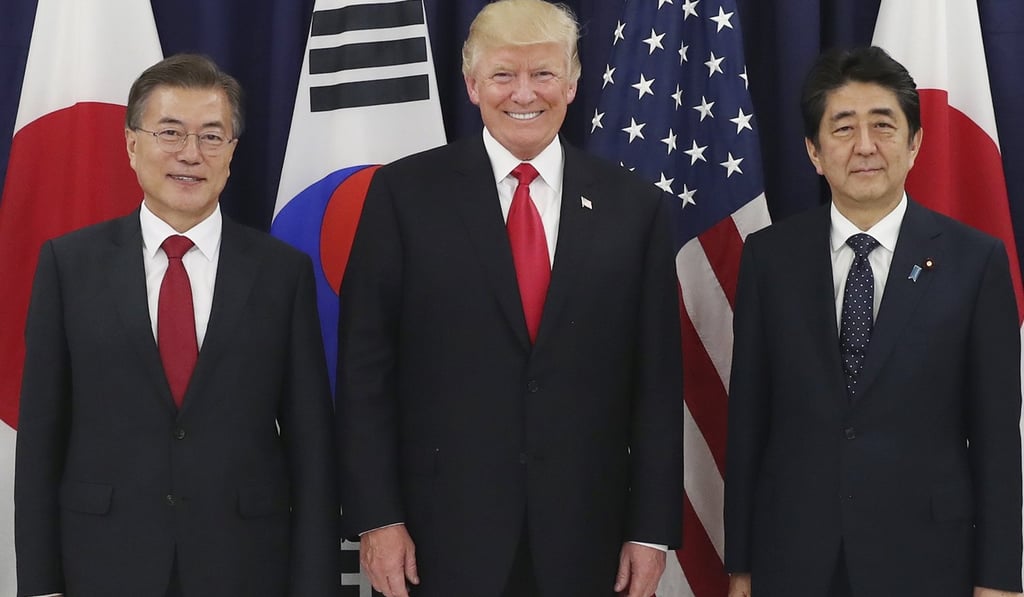
President Moon Jae-in of South Korea and Japanese Prime Minister Shinzo Abe with US President Donald Trump before a meeting in Hamburg on July 6. The three leaders agreed to get tougher on North Korea’s nuclear and missile programmes. Photo: EPA