Advertisement
Trump-Xi Jinping summit
Opinion

How the Xi-Trump summit can rebuild Sino-US trust and bring stability to the Korean peninsula

Tom Plate says erosion of mutual trust is the biggest obstacle to China and America jointly reducing tensions in East Asia, but the Florida summit offers their leaders a chance for change

4-MIN READ4-MIN
Tom Plate says erosion of mutual trust is the biggest obstacle to China and America jointly reducing tensions in East Asia, but the Florida summit offers their leaders a chance for change
Tom Plate
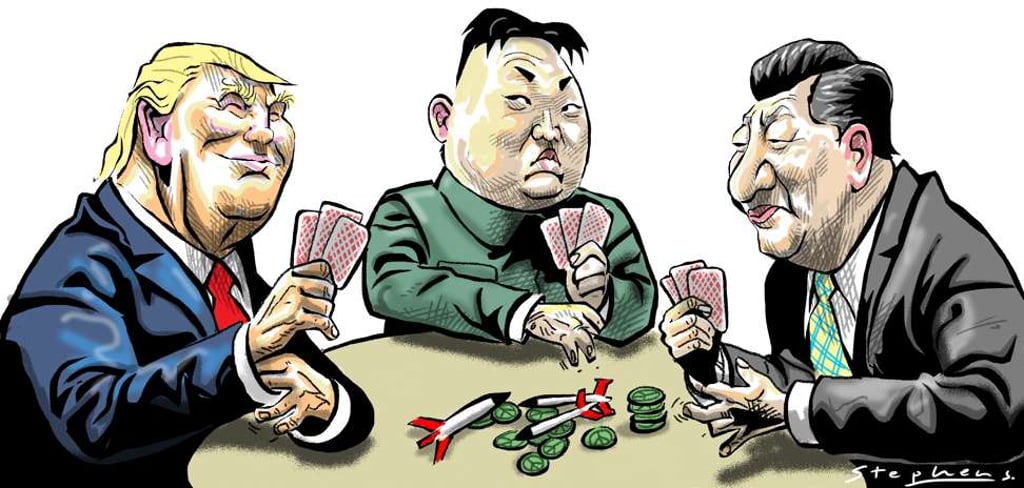
President Xi Jinping could use some face to show North Korean leader Kim Jong-un that a nuclear freeze is a must if the regime-change option is to drop off the White House table. Illustration: Craig Stephens
In the second term of Bill Clinton’s presidency, and the reign of Jiang Zemin (江澤民) and Zhu Rongji ( 朱鎔基 ), when both sides put economic engagement over geopolitical jiujitsu, overall trust levels between the US and Chinese governments seemed to be on an uptick. When China entered the World Trade Organisation – in 2001, just months into the George W. Bush administration – the Clintonites had reason to feel they had made a bit of history. Bilateral ties seemed to be heading in a pragmatic direction. There was, ­between the two, a quantum of solace.
The power of transactional trust is seen as central to social stability and economic efficiency

Some degree of trust is essential if the relationship is not to become dysfunctional. In western social science, the power of transactional trust is seen as central to social stability and economic efficiency. The very routine of habitually working together well can create its own positivity, a sort of social currency or bonus human capital. Clinton’s ace trade negotiator, Charlene Barshefsky, developed a close relationship with the exceptional Zhu, then China’s premier, and she would fly to Beijing at his ­invitation to offer officials briefings on WTO intricacies. A bilateral bitcoin almost seemed in the minting.
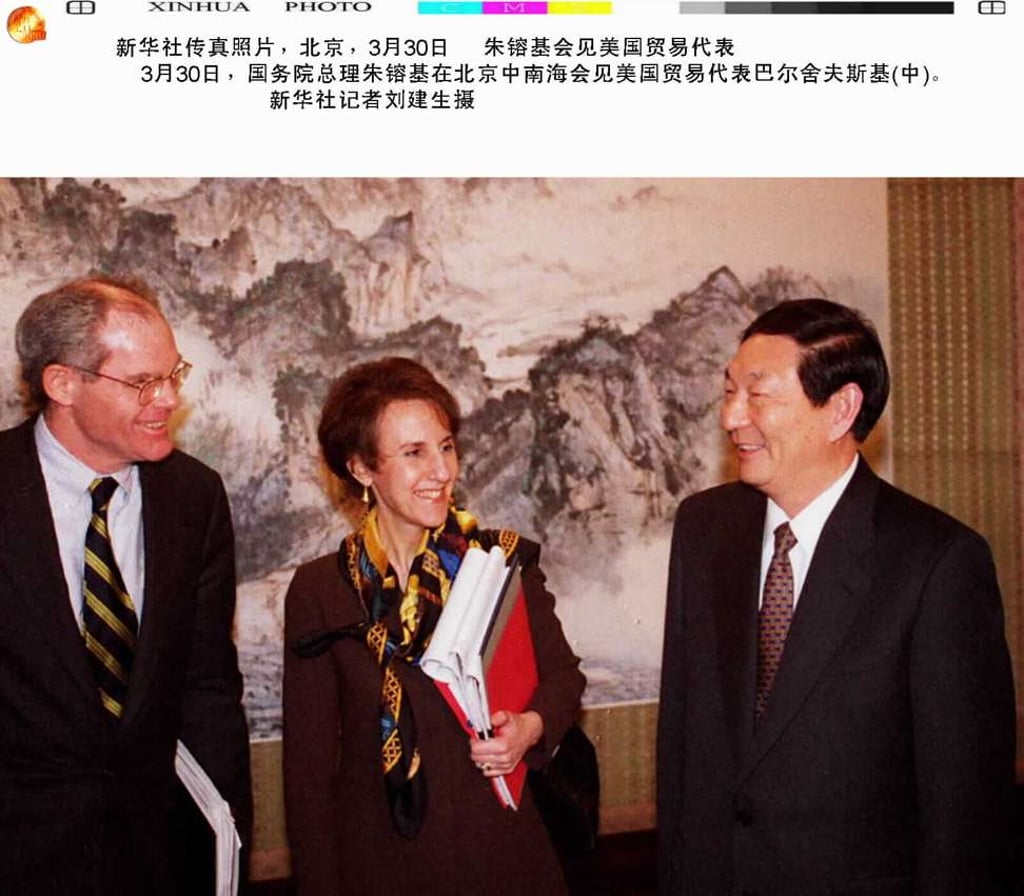
Then premier Zhu Rongji with US Trade Representative Charlene Barshefsky, and an American official, in Beijing on March 30, 1999. Photo: Xinhua

These days, one key impediment in the all-important Sino-US relationship is the relative waning of mutual trust. After the US-ignited global meltdown of 2008-2009, Chinese reverence for the macro-economic wisdom, and probity, of Wall Street/Washington evaporated. And ever since the rise of President Xi Jinping (習近平) and his pushy Pacific policy in the South China Sea, America’s take on Beijing went from a little trust to lots of verify. Today, the bilateral bitcoin is battered.

Select Voice
Select Speed
1x
AI-generated voice