China’s Apple iPhone ban hurts supplier stocks as CSI 300 Index suffers 1.4% weekly loss
- Suppliers including Foxconn Industrial Internet and Luxshare Precision Industry slumped as the CSI 300 Index logged a weekly loss
- Hong Kong cancelled Friday’s trading for stocks and derivatives after a black rainstorm warning
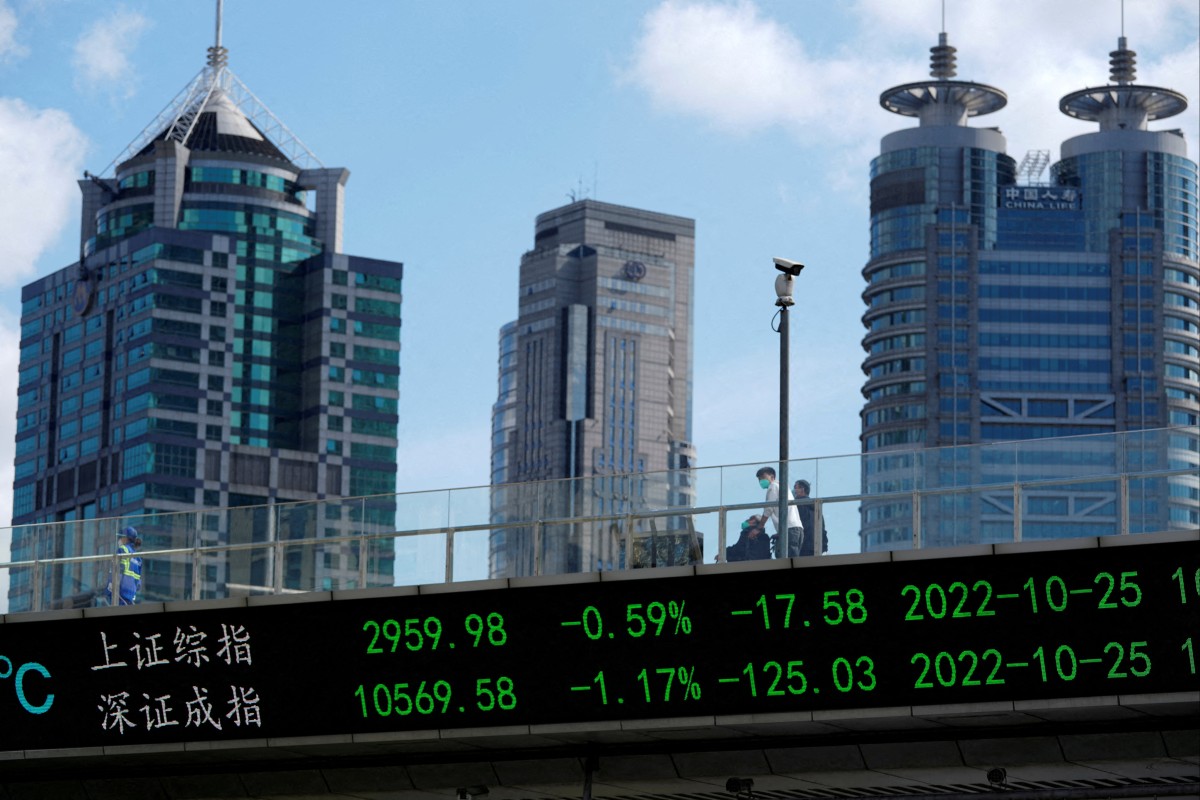
The CSI 300 Index fell 0.5 per cent to 3,739.99 at the close of Friday trading, culminating in a 1.4 per cent loss for the week. The Shanghai Composite Index declined 0.2 per cent and Shenzhen Composite Index retreated 0.4 per cent.
Battery producer Contemporary Amperex Technology retreated 1.6 per cent to 222.94 yuan, EV maker BYD dropped 1.8 per cent to 244.05 yuan and AI server maker Inspur Electronic slid 3.3 per cent to 35.17 yuan. Liquor distiller Kweichow Moutai weakened 1.1 per cent to 1,818.50 yuan while peer Wuliangye lost 1.3 per cent to 160.96 yuan.
Stocks slipped before a government report on inflation on Saturday. Prices probably increased in August after a decline in July, according to economist forecasts tracked by Bloomberg. But the readings are likely to remain weak amid the unwillingness of Chinese consumers to spend, said Tim Waterer, chief market analyst at KCM Trade.