Baidu star’s surprising exit casts doubt on company’s ambitions in artificial intelligence

The departure of Baidu’s most senior operational executive threatens to derail the Chinese search giant’s ambition of placing artificial intelligence at the heart of its business.
On Friday, the company stunned investors with the revelation that Microsoft veteran Lu Qi -- hired just over a year ago to accelerate its drive into everything from autonomous cars to digital assistants -- was stepping down because he could no longer work full-time in China for personal reasons. His departure triggered a 9.5 per cent plummet in Baidu’s share price, the biggest fall in almost three years, on fears its revival had been cut short. Credit Suisse Group became among the first to raise a warning flag when it downgraded the stock.
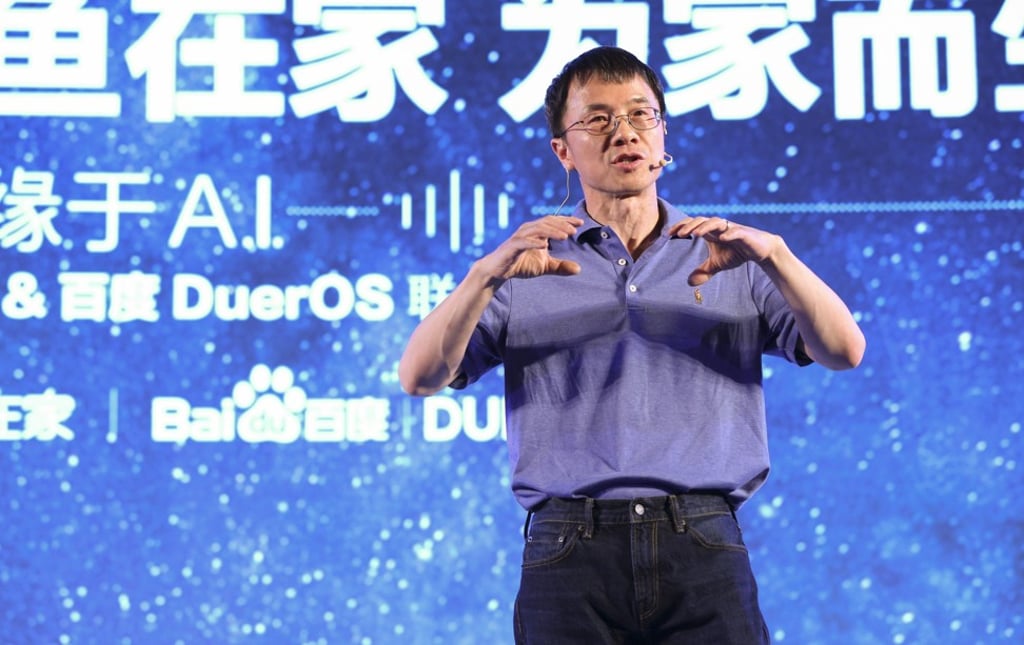
“While we are encouraged more than before by Baidu’s refocus on core business, latest loss of its top AI executive may add higher uncertainty to AI monetisation visibility,” Jefferies analysts led by Karen Chan wrote in a note Monday.
Baidu said it appointed Wang Haifeng senior vice-president and the new general manager of the company’s AI Group. President Zhang Yaqin will now also take on more responsibilities, including for the Apollo driverless car programme.
But Lu’s absence may be keenly felt. Since his appointment was announced in January 2017, the company’s shares have jumped more than 50 per cent while revenue and net income have both gained. In downgrading the stock, Credit Suisse analyst Thomas Chong wrote that Lu was “instrumental” to Baidu’s AI transition.