
There’s no excuse for the American gun culture
‘There is something mysterious and unique going on in the American brain that condones such a tragic national masochism,’ writes David Dodwell

The story starts in 1969 in Peshawar in Pakistan, where I was spending a year as a volunteer teacher in a school in the shadow of the Khyber Pass that led up into Afghanistan. My students were the normal rambunctious boys you would expect in almost any school worldwide. Except all of them were the sons of tribal leaders in territories stretching from Baluchistan in the south west, to Swat, Gilgit and Chitral in the north, bordering China.
When the kids returned from the Christmas break, my class of 31 was unexpectedly down to 29. Will they be long delayed? I asked. There is something weird about listening to a 12-year-old replying: “They will not be coming back sir. They are dead.”
Tribal feuds were endemic in the tribal territories, and guns were ubiquitous. Boys could handle firearms before they could tie shoelaces. Now, 48 years later, I wonder how many of my mischievous 12-year-old pupils are still alive.
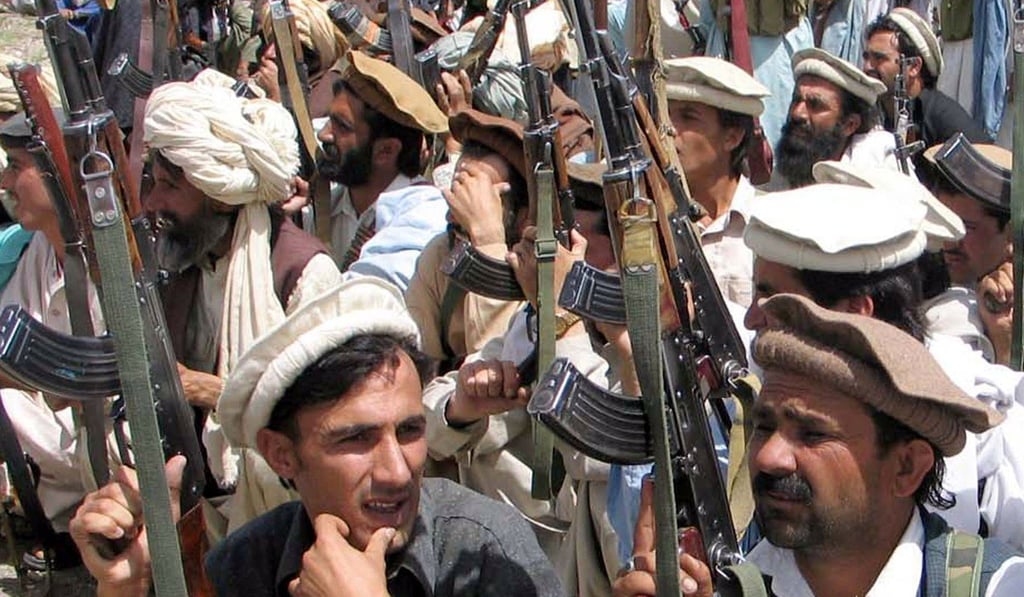
For the Bughti tribesmen who became my hosts and nighttime companions, handling guns was as routine as rolling a cigarette
So there I was, carried from Quetta, Baluchistan’s bedraggled capital, in a clattering 4-wheel-drive truck for 10 hours through the shimmering moonscape to the Jirga. What followed was the weirdest 10 days of my life. Sleeping on the desert ground on lemongrass bedding, eating freshly slaughtered goat from sticks planted next to the blazing night fire, tempered by a disgusting watery goat yoghurt, and wondering whether I was about to die of food poisoning.
By day, Akbar Bughti and his Marri counterpart sat under a shamiana in the middle of absolutely nowhere, with perhaps a thousand tribesmen on either side, haggling cash compensation for 20 murders, and more than 200 other offences, ranging from assaults, abductions of wives and daughters to the theft of horses and guns. Over those 10 days, compensation amounting to the equivalent of more than US$1m changed hands. I was impressed. How long would the Hong Kong legal system take to resolve so many major crimes?